
When Is the Best Time to Recharge Your AC's Refrigerant?
Solusi Karya Nusantara Technical Team · 2026-02-03 · 2 min read
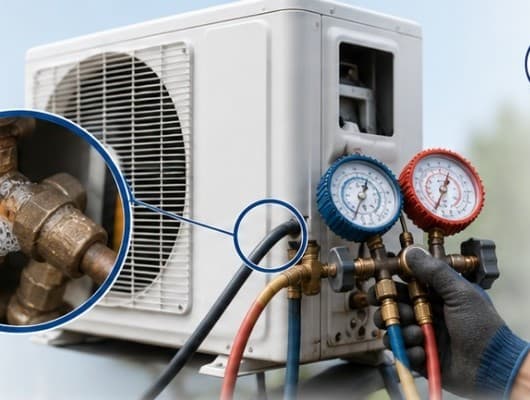
One of the most common misconceptions about air conditioning is that refrigerant needs to be topped up regularly, like fuel in a car. In reality, a properly sealed AC system should not lose refrigerant under normal operation at all.
Low Refrigerant Means a Leak
If a technician finds low refrigerant levels, that's a symptom, not a root cause. There is a leak point somewhere in the system — a pipe joint, the evaporator, or the condenser. Recharging without sealing the leak just guarantees the same problem returns within months.
Signs of Low Refrigerant
- Weak cooling even though the unit runs continuously
- Frost forming on the pipes or indoor unit
- A faint hissing sound from the unit
- Rising electricity bills with no other clear cause
For Industrial Systems, the Stakes Are Higher
In a chiller plant or cold storage system, an untreated refrigerant leak can cause sudden system failure under peak load — a far more expensive outcome than a routine inspection.
The Correct Sequence
- Detect the leak point with proper equipment, not guesswork.
- Repair the leak first.
- Only then recharge to the manufacturer's specification.
Skipping the first two steps means paying to fix a symptom, not the cause.
Solusi Karya Nusantara handles leak detection and refrigerant charging for everything from residential units to industrial chiller systems, to Daikin service standards.